OSHA Hazard Communication Training in Healthcare (Complete Guide)
Healthcare employees frequently work around chemicals, cleaning agents, disinfectants, medications, and other hazardous substances. Without proper training, exposure to these materials can lead to serious health risks, workplace injuries, and compliance violations.
OSHA Hazard Communication Training helps healthcare workers understand chemical hazards, safe handling procedures, and workplace safety requirements. This training is essential for maintaining a safe healthcare environment and complying with OSHA standards.
In this guide, we will explain OSHA Hazard Communication Training in healthcare, why it is important, and what employees learn during training.
What Is OSHA Hazard Communication Training?
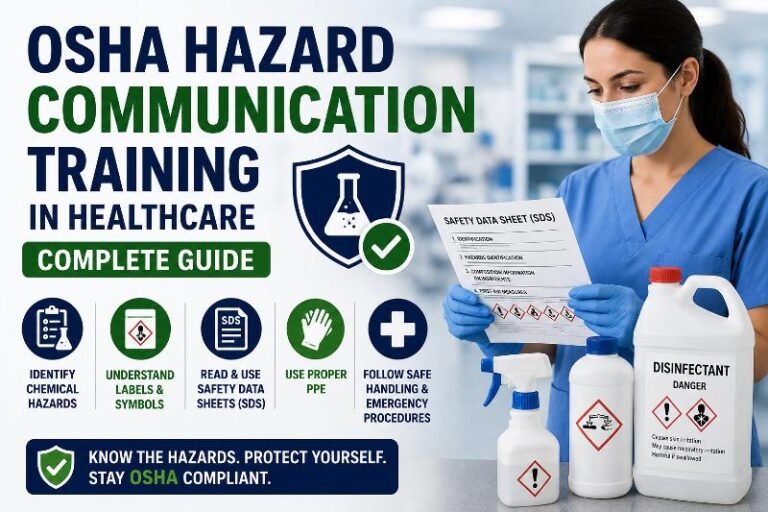
OSHA Hazard Communication Training is a workplace safety program designed to ensure employees understand the risks associated with hazardous chemicals.
The training focuses on:
- Chemical safety awareness
- Understanding hazard labels
- Safe handling procedures
- Emergency response practices
This training follows OSHA’s Hazard Communication Standard (HazCom), often called the “Right-to-Know” standard.
Why OSHA Hazard Communication Training Is Important
Protects Healthcare Workers
Reduces exposure to hazardous chemicals.
Prevents Workplace Injuries
Promotes safe handling practices.
Ensures OSHA Compliance
Helps organizations meet safety regulations.
Improves Workplace Safety
Creates a safer healthcare environment.
Reduces Legal Risks
Helps avoid penalties and compliance violations.
Common Hazardous Chemicals in Healthcare
Healthcare facilities contain many hazardous substances, including:
- Cleaning and disinfecting chemicals
- Laboratory chemicals
- Sterilization agents
- Medical gases
- Pharmaceutical products
Employees must understand how to work safely around these materials.
Key Topics Covered in OSHA Hazard Communication Training
Chemical Hazard Identification
Employees learn how to recognize hazardous substances in the workplace.
GHS Labels and Pictograms
Training includes understanding:
- Warning labels
- Hazard symbols
- Chemical classifications
Safety Data Sheets (SDS)
Employees learn how to read and use Safety Data Sheets to understand:
- Chemical risks
- First-aid measures
- Handling procedures
Safe Handling and Storage
Proper procedures for:
- Using chemicals safely
- Storing hazardous materials
- Preventing accidental exposure
Personal Protective Equipment (PPE)
Employees learn when and how to use:
- Gloves
- Masks
- Goggles
- Protective clothing
Emergency Procedures
Training includes how to respond to:
- Chemical spills
- Exposure incidents
- Fire hazards
Benefits of OSHA Hazard Communication Training
Increased Employee Safety
Reduces risk of injuries and illnesses.
Better Compliance
Ensures adherence to OSHA standards.
Improved Awareness
Employees understand workplace hazards.
Safer Healthcare Environment
Protects both employees and patients.
OSHA Hazard Communication Best Practices
- Read chemical labels carefully
- Always use proper PPE
- Store chemicals correctly
- Follow workplace safety procedures
- Report spills or exposure incidents immediately
Online OSHA Hazard Communication Training
Online training programs provide healthcare employees with flexible and convenient learning options.
Training programs offered by Compliance Courses Online help employees understand OSHA hazard communication standards, chemical safety
procedures, and workplace compliance requirements.
Recommended Training Course
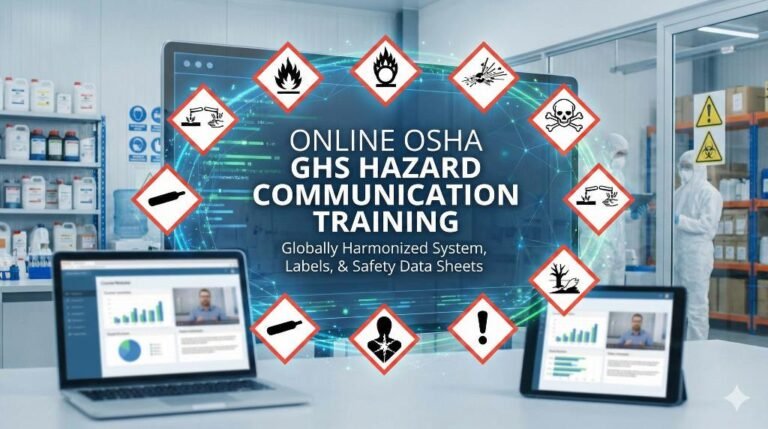
OSHA GHS Hazard Communication Training
This course helps healthcare employees understand hazardous chemical safety and OSHA compliance requirements.
The training covers:
- Chemical hazard identification
- GHS labels and SDS
- Safe handling practices
- Emergency response procedures
Conclusion
OSHA Hazard Communication Training is essential for maintaining safety in healthcare environments where employees regularly work with hazardous chemicals.
By understanding chemical risks, using proper protective equipment, and following safety procedures, healthcare employees can reduce workplace injuries and maintain compliance with OSHA standards.
Investing in proper hazard communication training helps create a safer, healthier, and more compliant workplace.
Expand Your Compliance Expertise
Healthcare Employee General Compliance Bundle of 7 Courses: $49
HIPAA Compliance Training for Healthcare Employees: $15
Fraud, Waste, and Abuse Compliance Training: $15
Bloodborne Pathogens Safety Compliance Training: $15
Cybersecurity Awareness Training for Healthcare Employees: $15
Workplace Violence Prevention & EAP Training: $15
Anti-Harassment and Discrimination Training for Employees: $15