Infection Control Training in Healthcare (Complete Guide)
In healthcare environments, preventing the spread of infections is critical for protecting both patients and healthcare workers. Hospitals, clinics, and medical facilities are high-risk environments where infections can spread quickly if proper precautions are not followed.
Infection control training helps healthcare employees understand how to prevent and control infections through proper hygiene practices, use of protective equipment, and adherence to safety protocols.
In this guide, we will explain infection control training in healthcare, why it is important, and how it helps maintain a safe and compliant healthcare environment.
What Is Infection Control Training?
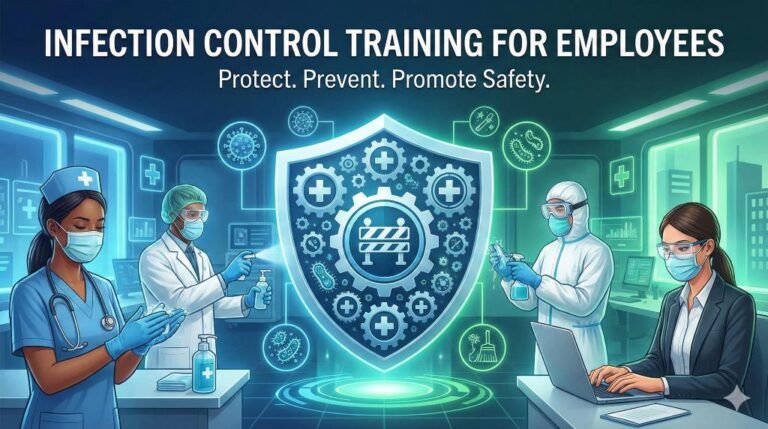
Infection control training is a program designed to educate healthcare workers on how to prevent the spread of infectious diseases.
This training focuses on:
- Hygiene practices
- Use of protective equipment
- Safe handling of medical materials
- Preventing cross-contamination
Why Infection Control Training Is Important
Protects Patients
Prevents the spread of infections in healthcare settings.
Protects Healthcare Workers
Reduces exposure to harmful pathogens.
Ensures Compliance
Meets healthcare safety regulations.
Improves Quality of Care
Creates a safer environment for treatment.
Common Sources of Infection in Healthcare
- Contaminated surfaces
- Improper hand hygiene
- Exposure to bodily fluids
- Medical equipment
- Airborne pathogens
Understanding these risks is essential for prevention.
Key Topics Covered in Infection Control Training
Hand Hygiene
Proper handwashing techniques are one of the most effective ways to prevent infections.
Personal Protective Equipment (PPE)
Employees learn how to use:
- Gloves
- Masks
- Gowns
- Face shields
Infection Prevention Practices
- Cleaning and disinfecting surfaces
- Safe disposal of waste
- Avoiding cross-contamination
Handling Infectious Materials
Proper procedures for handling blood and other potentially infectious materials.
Standard Precautions
Following universal safety measures in all patient interactions.
Benefits of Infection Control Training
Reduced Infection Rates
Minimizes risk of disease transmission.
Improved Workplace Safety
Protects employees and patients.
Better Compliance
Ensures adherence to regulations.
Increased Awareness
Employees understand safety protocols.
Online Infection Control Training
Online training programs allow healthcare employees to complete infection control training conveniently.
Training programs offered by Compliance Courses Online help employees understand infection risks, safety procedures, and compliance requirements.
Related Training Courses
This training is closely related to:
Healthcare Employee General Compliance Bundle of 7 Courses: $49
HIPAA Compliance Training for Healthcare Employees: $25
Fraud, Waste, and Abuse Compliance Training: $25
Bloodborne Pathogens Safety Compliance Training: $25
Cybersecurity Awareness Training for Healthcare Employees: $25
OSHA GHS Hazard Communication Training: $25
Workplace Violence Prevention & EAP Training: $25
Anti-Harassment and Discrimination Training for Employees: $25
These courses together provide complete safety knowledge.
Conclusion
Infection control training is essential for maintaining safety in healthcare environments. By following proper procedures and completing training, healthcare employees can prevent the spread of infections and protect both patients and themselves.
Investing in infection control training is a critical step toward building a safe and compliant healthcare workplace.