Bloodborne Pathogens Training in Healthcare (Complete Guide)
Healthcare workers are frequently exposed to environments where they may come into contact with blood and other potentially infectious materials. These exposures can pose serious health risks if proper precautions are not followed.
Bloodborne pathogens training is essential for healthcare employees to understand how to protect themselves, prevent exposure, and respond safely in case of incidents. This training is a key requirement for maintaining workplace safety and compliance.
In this guide, we will explain bloodborne pathogens training in healthcare, why it is important, and what employees need to learn.
What Are Bloodborne Pathogens?
Bloodborne pathogens are microorganisms present in blood that can cause diseases in humans.
Common examples include:
- Hepatitis B (HBV)
- Hepatitis C (HCV)
- Human Immunodeficiency Virus (HIV)
These pathogens can be transmitted through contact with infected blood or bodily fluids.
Why Bloodborne Pathogens Training Is Important
Protects Healthcare Workers
Reduces risk of exposure to infectious diseases.
Ensures Workplace Safety
Promotes safe handling of hazardous materials.
Meets OSHA Requirements
Required for employees at risk of exposure.
Prevents Infections
Helps control the spread of diseases.
Who Needs Bloodborne Pathogens Training?
This training is required for:
- Nurses and doctors
- Laboratory technicians
- Medical assistants
- Cleaning staff in healthcare facilities
- Emergency responders
Anyone exposed to blood or bodily fluids must complete this training.
Key Topics Covered in Bloodborne Pathogens Training
Exposure Control Plan
Employees learn how to minimize exposure risks.
Modes of Transmission
Understanding how infections spread through:
- Cuts and injuries
- Needle sticks
- Contact with open wounds
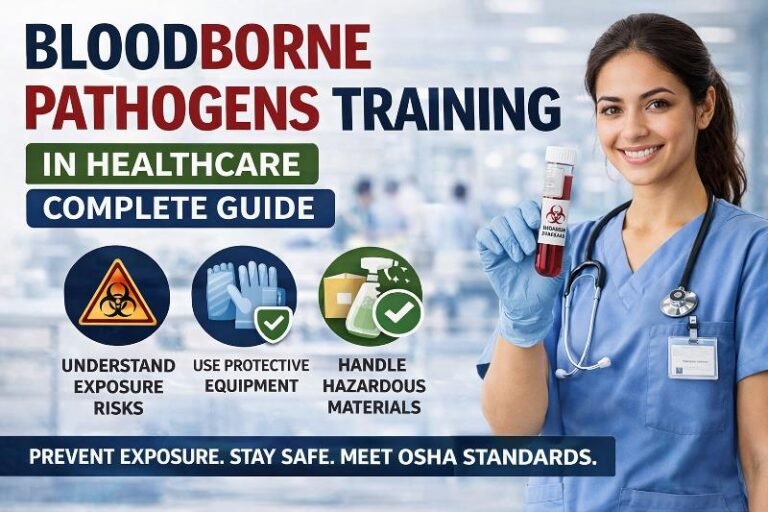
Personal Protective Equipment (PPE)
Employees learn how to use:
- Gloves
- Masks
- Protective clothing
Safe Handling of Sharps
Proper handling and disposal of needles and sharp objects.
Cleaning and Disinfection
Procedures for cleaning contaminated surfaces safely.
Emergency Response
Steps to take in case of exposure incidents.
Common Exposure Risks in Healthcare
- Needle stick injuries
- Contact with open wounds
- Handling contaminated equipment
- Improper disposal of medical waste
Understanding these risks helps prevent accidents.
Benefits of Bloodborne Pathogens Training
Increased Safety
Reduces risk of infection.
Better Compliance
Meets workplace safety regulations.
Improved Awareness
Employees understand risks and prevention.
Professional Development
Enhances career credibility.
Online Bloodborne Pathogens Training
Online training programs provide a convenient way for healthcare employees to complete required training.
Training programs offered by Compliance Courses Online help employees understand exposure risks, safety procedures, and compliance requirements.
Recommended Training Course
Bloodborne Pathogens Safety Compliance Training
This course helps employees understand how to prevent exposure and handle hazardous materials safely.
The training covers:
- Exposure prevention
- PPE usage
- Safe handling procedures
- Emergency response
Conclusion
Bloodborne pathogens training is a critical component of healthcare safety and compliance. By understanding how infections spread and how to prevent exposure, healthcare workers can protect themselves and others.
Proper training ensures a safer workplace, reduces risks, and helps healthcare organizations maintain compliance with regulations.
This training is closely related to:
Healthcare Employee General Compliance Bundle of 7 Courses: $49
HIPAA Compliance Training for Healthcare Employees: $25
Fraud, Waste, and Abuse Compliance Training: $25
Bloodborne Pathogens Safety Compliance Training: $25
Infection Control Training for Employees: $25
Cybersecurity Awareness Training for Healthcare Employees: $25
OSHA GHS Hazard Communication Training: $25
Workplace Violence Prevention & EAP Training: $25
Anti-Harassment and Discrimination Training for Employees: $25