Workplace Violence Prevention Training in Healthcare (Complete Guide)
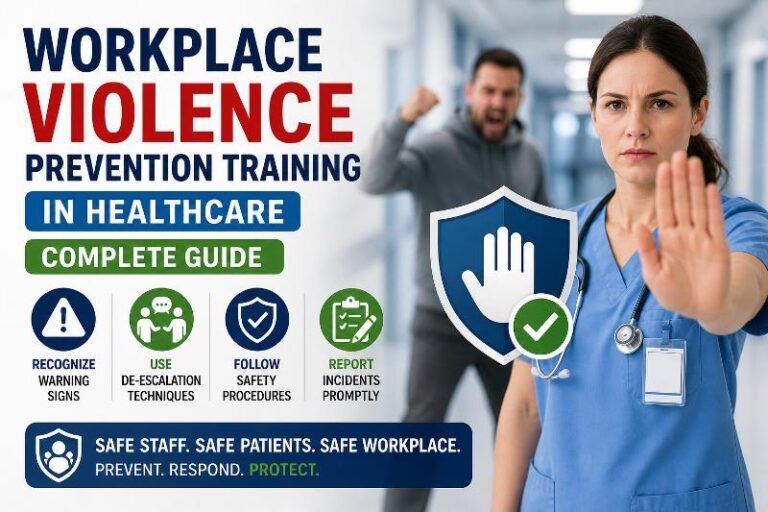
Healthcare environments can be fast-paced, high-stress, and emotionally intense, which sometimes increases the risk of workplace violence. Healthcare workers often interact with patients, families, and visitors who may be under stress, making it essential to maintain a safe and controlled environment.
Workplace violence prevention training in healthcare helps employees recognize warning signs, handle difficult situations, and respond appropriately to prevent harm.
In this guide, we will explain workplace violence prevention training in healthcare, why it is important, and how it helps ensure a safe and compliant workplace.
What Is Workplace Violence in Healthcare?
Workplace violence refers to any act of physical violence, threats, harassment, or intimidation that occurs in a healthcare setting.
It can include:
- Verbal threats or abuse
- Physical assault
- Harassment
- Aggressive behavior from patients or visitors
Healthcare workers are among the most at-risk professionals for workplace violence.
Why Workplace Violence Prevention Training Is Important
Protects Healthcare Workers
Reduces risk of injury and harm.
Improves Patient Safety
Ensures a calm and controlled environment.
Supports Compliance
Meets workplace safety and OSHA requirements.
Reduces Legal Risks
Prevents incidents that could lead to liability.
Enhances Workplace Culture
Promotes respect and professionalism.
Common Causes of Workplace Violence in Healthcare
- Emotional stress of patients and families
- Long waiting times
- Mental health conditions
- Substance abuse
- Miscommunication
Understanding these causes helps prevent incidents.
Types of Workplace Violence in Healthcare
Type 1: Criminal Intent
Violence by individuals with no relationship to the facility.
Type 2: Patient or Visitor Violence
Most common type in healthcare settings.
Type 3: Worker-on-Worker
Conflicts between employees.
Type 4: Personal Relationship Violence
Domestic issues that enter the workplace.
Key Topics Covered in Workplace Violence Prevention Training
Recognizing Warning Signs
Employees learn to identify:
- Aggressive behavior
- Verbal threats
- Signs of escalation
De-escalation Techniques
Training includes:
- Communication strategies
- Staying calm under pressure
- Conflict resolution
Emergency Response Procedures
Employees learn how to:
- Respond during violent incidents
- Follow safety protocols
- Alert security or authorities
Reporting Procedures
Proper documentation and reporting of incidents.
Personal Safety Measures
Employees learn how to protect themselves and others.
Benefits of Workplace Violence Prevention Training
Safer Work Environment
Reduces risk of incidents.
Increased Employee Confidence
Staff feel more prepared and secure.
Better Compliance
Meets workplace safety standards.
Improved Patient Experience
Creates a calmer healthcare environment.
Workplace Violence Prevention Best Practices
- Stay aware of surroundings
- Use clear communication
- Report suspicious behavior
- Follow safety protocols
- Avoid working alone in high-risk areas
Online Workplace Violence Prevention Training
Online training programs provide flexible learning options for healthcare employees.
Training programs offered by Compliance Courses Online help employees understand how to prevent workplace violence, respond effectively, and maintain a safe work environment.
Workplace Violence Prevention & EAP Training
This course helps employees understand how to manage risks and respond to workplace violence.
The training covers:
- Identifying risks
- De-escalation techniques
- Emergency response
- Employee support programs (EAP)
Conclusion
Workplace violence prevention training is essential for maintaining safety in healthcare environments. By understanding risks, recognizing warning signs, and responding effectively, healthcare employees can prevent incidents and create a safer workplace.
Investing in proper training not only protects employees but also improves patient care and organizational trust.
Expand Your Compliance Expertise
Healthcare Employee General Compliance Bundle of 7 Courses: $49
HIPAA Compliance Training for Healthcare Employees: $15
Fraud, Waste, and Abuse Compliance Training: $15
Bloodborne Pathogens Safety Compliance Training: $15
OSHA GHS Hazard Communication Training: $15
Cybersecurity Awareness Training for Healthcare Employees: $15
Anti-Harassment and Discrimination Training for Employees: $15