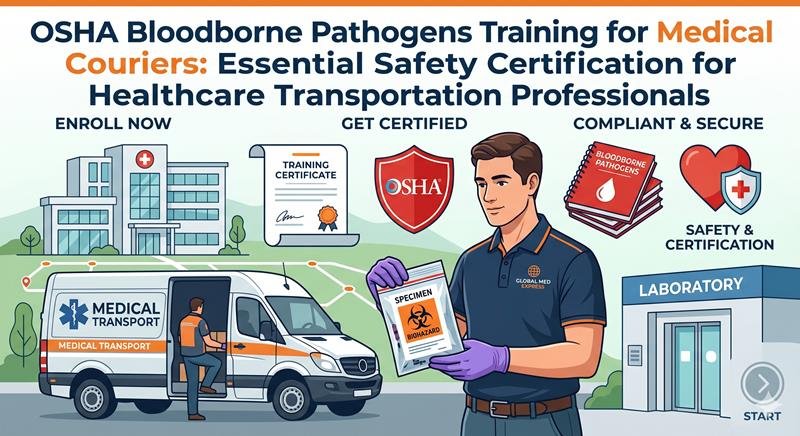
OSHA Bloodborne Pathogens Training for Medical Couriers: Essential Safety Certification for Healthcare Transportation Professionals
Medical couriers play a critical role in the healthcare supply chain by transporting laboratory specimens, blood samples, medical records, pharmaceuticals, chemotherapy drugs, and other healthcare-related materials. Because medical couriers frequently handle potentially infectious materials, they face unique occupational hazards that require specialized safety training.
One of the most important certifications for healthcare transportation professionals is OSHA Bloodborne Pathogens Training for Medical Couriers. This training helps couriers understand workplace hazards, prevent exposure to infectious materials, and comply with Occupational Safety and Health Administration (OSHA) requirements.
Whether you are a new medical courier, independent contractor, laboratory transportation specialist, or healthcare logistics professional, Bloodborne Pathogens Training is an essential component of workplace safety and regulatory compliance.
What Is OSHA Bloodborne Pathogens Training?
OSHA Bloodborne Pathogens Training is a workplace safety program designed to educate employees who may come into contact with blood or other potentially infectious materials (OPIM) during the course of their work.
The training is based on OSHA’s Bloodborne Pathogens Standard (29 CFR 1910.1030), which establishes requirements for protecting workers from exposure to infectious diseases transmitted through blood and bodily fluids.
The primary goals of Bloodborne Pathogens Training are to:
- Reduce workplace exposure risks
- Prevent transmission of infectious diseases
- Promote safe handling practices
- Ensure compliance with OSHA regulations
- Improve employee safety awareness
- Teach proper use of personal protective equipment (PPE)
For medical couriers, this training provides the knowledge needed to safely transport biological specimens, blood products, and healthcare materials.
Why Medical Couriers Need Bloodborne Pathogens Training
Medical couriers routinely transport materials that may contain infectious agents. During collection, packaging, loading, transportation, and delivery, there is a possibility of accidental exposure to bloodborne pathogens.
Potential risks include:
- Leaking specimen containers
- Damaged packaging
- Broken vials or blood tubes
- Accidental spills during transportation
- Exposure during emergency situations
- Contact with contaminated surfaces
Without proper training, these situations can pose significant health risks to both couriers and the public.
Bloodborne Pathogens Training helps medical couriers understand how to identify hazards, respond appropriately, and minimize exposure risks.
Understanding Bloodborne Pathogens
Bloodborne pathogens are microorganisms present in human blood and certain bodily fluids that can cause disease in humans.
Common bloodborne pathogens include:
Hepatitis B Virus (HBV)
HBV affects the liver and can lead to chronic liver disease, liver failure, and liver cancer. It is one of the most infectious bloodborne pathogens.
Hepatitis C Virus (HCV)
HCV primarily affects the liver and may cause long-term health complications if left untreated.
Human Immunodeficiency Virus (HIV)
HIV attacks the immune system and can lead to Acquired Immunodeficiency Syndrome (AIDS) if not properly managed.
Medical couriers must understand how these pathogens are transmitted and how exposure can be prevented.
OSHA Requirements for Medical Couriers
OSHA requires employers to provide Bloodborne Pathogens Training when employees have occupational exposure to blood or other potentially infectious materials.
Training should cover:
- Bloodborne pathogen hazards
- Exposure control plans
- Modes of disease transmission
- Personal protective equipment
- Engineering controls
- Work practice controls
- Spill response procedures
- Decontamination methods
- Medical evaluations and follow-up
- Reporting exposure incidents
Employers are responsible for ensuring that employees receive appropriate training and understand workplace safety procedures.
Key Topics Covered in OSHA Bloodborne Pathogens Training for Medical Couriers
Bloodborne Pathogen Awareness
Participants learn how infectious diseases spread and how occupational exposure can occur during transportation activities.
Exposure Control Plans
Medical couriers learn about exposure control strategies designed to reduce workplace risks.
Universal Precautions
Universal precautions require treating all blood and bodily fluids as potentially infectious.
This approach helps reduce accidental exposure and improves overall workplace safety.
Personal Protective Equipment (PPE)
Training covers proper use of:
- Disposable gloves
- Face shields
- Protective eyewear
- Masks
- Protective clothing
Proper PPE selection and usage are essential for reducing contamination risks.
Safe Handling of Medical Specimens
Participants learn:
- Specimen transport procedures
- Packaging requirements
- Labeling protocols
- Chain-of-custody procedures
- Safe loading and unloading practices
Spill Response Procedures
Medical couriers must know how to respond to:
- Leaking containers
- Broken specimen tubes
- Blood spills
- Contaminated surfaces
Training teaches proper containment, cleanup, and reporting procedures.
Exposure Incident Reporting
Employees learn how to:
- Report exposures immediately
- Seek medical evaluation
- Complete incident documentation
- Follow post-exposure protocols
Benefits of OSHA Bloodborne Pathogens Certification for Medical Couriers
Enhanced Workplace Safety
Training significantly reduces the likelihood of exposure to infectious materials.
Regulatory Compliance
Employers can demonstrate compliance with OSHA workplace safety requirements.
Professional Development
Certification helps medical couriers build professional credentials and enhance their qualifications.
Increased Employment Opportunities
Many healthcare organizations, laboratories, hospitals, and courier companies prefer or require Bloodborne Pathogens Certification.
Reduced Liability Risks
Properly trained employees help organizations minimize workplace incidents and regulatory violations.
Improved Confidence
Medical couriers gain confidence when handling sensitive healthcare materials and responding to emergencies.
Who Should Take OSHA Bloodborne Pathogens Training?
This training is highly recommended for:
- Medical couriers
- Laboratory specimen transporters
- Independent medical delivery contractors
- Healthcare logistics personnel
- Hospital transportation staff
- Mobile phlebotomy couriers
- Diagnostic laboratory employees
- Medical supply delivery professionals
- Clinical research transportation personnel
- Healthcare support workers
Anyone who may come into contact with blood or potentially infectious materials can benefit from this training.
Bloodborne Pathogens and Medical Specimen Transportation
Medical specimen transportation involves strict safety protocols designed to protect patients, healthcare workers, and couriers.
Best practices include:
- Using approved specimen containers
- Verifying package integrity
- Maintaining proper temperature controls
- Following transportation regulations
- Wearing appropriate PPE
- Conducting vehicle inspections
- Maintaining spill kits in vehicles
- Reporting incidents promptly
Bloodborne Pathogens Training reinforces these critical safety practices.
Online OSHA Bloodborne Pathogens Training for Medical Couriers
Online training provides a flexible and convenient way for medical couriers to complete certification requirements.
Benefits of online training include:
- Self-paced learning
- Immediate course access
- Mobile-friendly training
- Convenient scheduling
- Printable certificates
- Cost-effective compliance solutions
- Accessible from anywhere
Online certification allows busy professionals to complete training without disrupting their work schedules.
OSHA Bloodborne Pathogens Training for Medical Couriers is an essential safety certification that helps protect workers, healthcare organizations, and the communities they serve. By understanding bloodborne pathogen risks, exposure prevention strategies, personal protective equipment requirements, and spill response procedures, medical couriers can safely perform their duties while maintaining regulatory compliance.
Whether you are beginning a career as a medical courier or seeking to strengthen your professional qualifications, Bloodborne Pathogens Certification is a valuable investment in workplace safety, career advancement, and healthcare transportation excellence.
Completing OSHA Bloodborne Pathogens Training demonstrates your commitment to safety, compliance, and professional responsibility while helping ensure the secure transportation of medical specimens and healthcare materials.