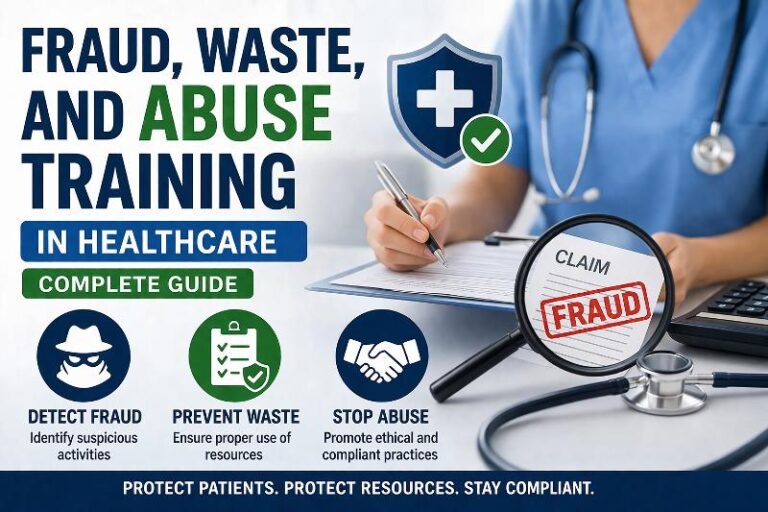
Fraud, Waste, and Abuse Training in Healthcare (Complete Guide)
The healthcare industry handles large amounts of financial transactions, insurance claims, and patient services. Unfortunately, this also makes it vulnerable to fraud, waste, and abuse (FWA), which can result in significant financial losses and legal consequences.
To prevent these issues, healthcare organizations require employees to complete fraud, waste, and abuse training. This training helps employees understand how to identify suspicious activities, follow compliance regulations, and report violations.
In this guide, we will explain fraud, waste, and abuse training in healthcare, why it is important, and how it helps maintain compliance.
What Is Fraud, Waste, and Abuse?
Fraud, waste, and abuse are different types of improper practices in healthcare.
Fraud
Fraud involves intentional deception for financial gain.
Examples:
- Billing for services not provided
- Submitting false claims
- Misrepresenting services
Waste
Waste refers to overuse or misuse of resources.
Examples:
- Unnecessary medical tests
- Inefficient use of services
- Over-prescribing medications
Abuse
Abuse involves practices that may not be intentional but result in improper costs.
Examples:
- Improper billing practices
- Providing services that are not medically necessary
Why FWA Training Is Important
Fraud, waste, and abuse training plays a critical role in healthcare compliance.
Prevents Financial Loss
Reduces unnecessary costs and fraud.
Ensures Compliance
Helps organizations follow regulations.
Protects Patients
Ensures ethical and appropriate care.
Avoids Legal Consequences
Non-compliance can result in fines and penalties.
Why FWA Training Is Important
FWA training is required for:
- Healthcare employees
- Billing and coding staff
- Insurance professionals
- Administrative staff
- Healthcare providers
Anyone involved in healthcare operations should complete this training.
What Is Covered in FWA Training?
FWA training includes key topics that help employees understand compliance.
Identifying Fraudulent Activities
Employees learn how to detect suspicious behavior and false claims.
Reporting Procedures
Training includes how to report fraud safely and correctly.
Compliance Regulations
Employees understand laws and policies related to healthcare compliance.
Ethical Responsibilities
Training emphasizes integrity and ethical practices in healthcare.
Examples of Fraud, Waste, and Abuse in Healthcare
Understanding real-world examples helps employees recognize risks.
Fraud Example
Billing for procedures that were never performed.
Waste Example
Ordering unnecessary medical tests.
Abuse Example
Charging for services that are not required.
Benefits of FWA Training
Completing FWA training offers several advantages.
Improved Compliance
Ensures adherence to regulations.
Reduced Risk
Helps prevent fraud and violations.
Better Workplace Practices
Promotes ethical behavior.
Career Growth
Enhances professional credibility.
Benefits of FWA Training
Online training programs provide flexible learning options for healthcare employees. These programs allow employees to complete training at their own pace.
Training programs offered by Compliance Courses Online help employees understand fraud prevention, compliance requirements, and ethical practices in healthcare.
Recommended FWA Training Course
Fraud, Waste, and Abuse Compliance Training
This course is designed to help employees identify and prevent fraud in healthcare systems.
The training covers:
- Fraud detection
- Reporting procedures
- Compliance regulations
- Ethical practices
Related Articles
Conclusion
Fraud, waste, and abuse are serious issues in the healthcare industry that can lead to financial losses, legal consequences, and compromised patient care. Proper training helps employees identify risks, follow regulations, and maintain ethical standards.
By completing fraud, waste, and abuse training, healthcare professionals can contribute to a more transparent, compliant, and efficient healthcare system.
Expand Your Compliance Expertise
Healthcare Employee General Compliance Bundle of 7 Courses: $49
HIPAA Compliance Training for Healthcare Employees: $25
Cybersecurity Awareness Training for Healthcare Employees: $25
Fraud, Waste, and Abuse Compliance Training: $25
Bloodborne Pathogens Safety Compliance Training: $25
OSHA GHS Hazard Communication Training: $25
Workplace Violence Prevention & EAP Training: $25
Anti-Harassment and Discrimination Training for Employees