Truck Driver Safety Training: Complete Guide for Compliance & Certification
The trucking industry is one of the most essential sectors in the global economy, responsible for transporting goods across cities, states, and countries. However, with this responsibility comes significant safety risks. Commercial drivers operate large vehicles under varying road and weather conditions, making safety training a critical requirement.
Truck driver safety training helps drivers understand regulations, reduce accidents, and ensure compliance with industry standards. Whether you are a new driver entering the industry or an experienced professional, proper training is essential for maintaining safety and improving job performance.
In this complete guide, we will cover everything you need to know about truck driver safety training, including key training areas, compliance requirements, and how to get certified.
Why Truck Driver Safety Training Is Important
Safety training is essential in the trucking industry due to the high risks involved in operating commercial vehicles.
Prevent Road Accidents
Training helps drivers identify hazards and react appropriately.
Ensure Regulatory Compliance
Drivers must follow strict transportation regulations.
Protect Drivers and Public Safety
Proper training reduces the risk of injuries and fatalities.
Improve Driving Skills
Training enhances awareness, control, and decision-making.
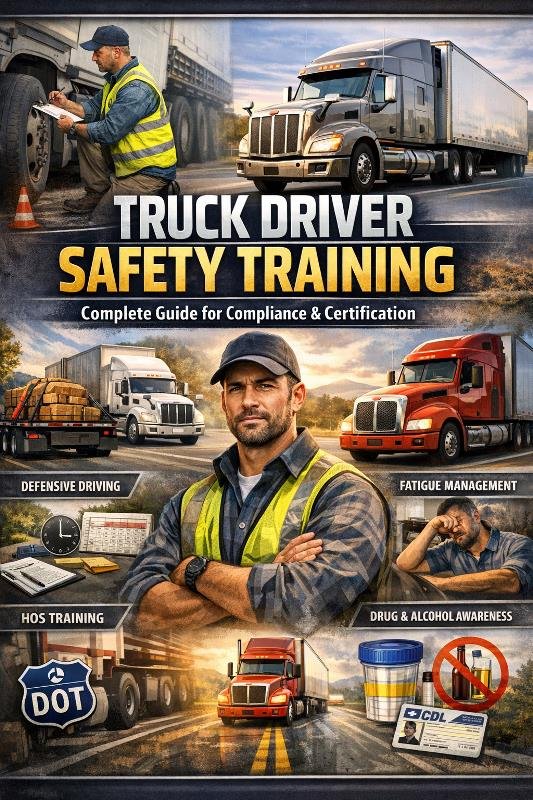
Key Truck Driver Safety Training Programs
To ensure compliance and safety, drivers should complete the following training programs.
Defensive Driving Training
Defensive driving teaches drivers how to anticipate and respond to road hazards safely.
Key topics include:
- Maintaining safe following distance
- Managing blind spots
- Handling aggressive drivers
- Safe braking techniques
Hours of Service (HOS) Training
HOS regulations help prevent driver fatigue by limiting driving hours.
Drivers learn:
- Maximum driving hours
- Required rest breaks
- Logbook compliance
Cargo Securement Compliance Training
Proper cargo securement is critical for preventing accidents caused by shifting or falling loads during transport. This training helps drivers understand how to safely secure different types of cargo using appropriate equipment and techniques.
Drivers learn:
- Load securement methods and standards
- Use of straps, chains, and tie-downs
- Weight distribution and balance
- Inspection of cargo during transit
This training is essential for maintaining road safety and complying with transportation regulations.
Drug and Alcohol Awareness Training for Drivers
Drug and alcohol awareness training is crucial in the trucking industry, where safety is a top priority. This training helps drivers understand the risks associated with substance use and the strict regulations that prohibit driving under the influence.
Drivers learn:
- Effects of drugs and alcohol on driving performance
- DOT regulations and testing requirements
- Recognizing substance abuse risks
- Workplace policies and compliance
This training ensures drivers remain alert, responsible, and compliant with safety regulations.
Pre- and Post-Trip Inspection Training
This training ensures that vehicles are inspected before and after each trip to identify potential safety issues.
Drivers learn:
- Checking brakes, tires, lights
- Identifying mechanical problems
- Reporting maintenance issues
Driver Fatigue Management Training
Fatigue is a major cause of trucking accidents. Training helps drivers recognize signs of fatigue and manage rest schedules effectively.
Trucking Safety Regulations and Compliance
The trucking industry is regulated by strict safety guidelines to ensure safe operations.
DOT Regulations
Drivers must comply with Department of Transportation rules.
Vehicle Inspection Requirements
Regular inspections are mandatory for safety compliance.
Drug and Alcohol Policies
Strict policies ensure drivers operate vehicles safely.
Licensing Requirements
Drivers must hold a valid Commercial Driver’s License (CDL).
Benefits of Truck Driver Safety Training
Providing proper training offers several advantages:
Reduced Accidents
Well-trained drivers are less likely to be involved in accidents.
Improved Job Opportunities
Certified drivers have better career prospects.
Increased Efficiency
Training improves operational performance.
Legal Compliance
Ensures adherence to industry regulations.
Online Truck Driver Safety Training
Online training programs provide flexible learning options for drivers. These courses allow drivers to complete training at their own pace while gaining essential knowledge.
Training programs offered by Compliance Courses Online help drivers understand safety regulations, improve driving skills, and maintain compliance with industry standards.
How to Get Started with Truck Driver Safety Training
Follow these steps:
Step 1: Choose Required Training
Identify courses relevant to your role.
Step 2: Complete Online Training
Enroll in certified programs.
Step 3: Get Certified
Add certifications to your resume.
Step 4: Apply Knowledge on the Road
Practice safe driving habits consistently.
Conclusion
Truck driver safety training is essential for maintaining compliance, reducing risks, and improving overall performance in the trucking industry. With proper training, drivers can operate vehicles safely, protect themselves and others, and build successful careers.
Investing in safety training is not just about compliance—it is about responsibility, professionalism, and long-term success in the trucking industry.
Expand Your Compliance Expertise with these Courses
DOT/FMCSA Compliance Training Bundle of 6 Courses for Drivers: $49
Hours-of-Service (HOS) Compliance Training: $25
Truck Driver Fatigue Compliance Course: $25
Drug and Alcohol Awareness Training for Drivers: $25
Pre- and Post-Trip Inspections Compliance Training: $25
Cargo Securement Compliance Training: $25
Defensive Driving for CMV Operators Course: $25