Fire Safety Training for Restaurant Staff
Restaurants are one of the most high-risk environments when it comes to fire hazards. With open flames, hot cooking surfaces, electrical equipment, and flammable materials used daily, the risk of fire incidents is significantly higher compared to many other workplaces.
A small mistake—such as overheating oil or leaving equipment unattended—can quickly turn into a dangerous situation. That’s why fire safety training for restaurant staff is essential. Proper training helps employees understand how to prevent fires, respond effectively during emergencies, and protect both customers and coworkers.
In this guide, we will explain the importance of fire safety training, common fire hazards in restaurants, and how proper training can help maintain a safe and compliant workplace.
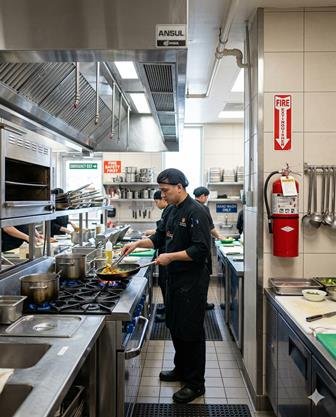
Why Fire Safety Training Is Important in Restaurants
Fire safety training is critical for maintaining a safe restaurant environment. Without proper knowledge and preparation, employees may not know how to respond during an emergency.
Prevent Kitchen Fires
Training helps employees identify risks and take preventive measures before a fire starts.
Protect Employees and Customers
Proper training ensures that everyone in the restaurant knows how to respond safely during emergencies.
Ensure Regulatory Compliance
Restaurants must follow fire safety regulations and standards to operate legally.
Reduce Business Risks
Fire incidents can lead to property damage, financial losses, and business closure.
Providing fire safety training helps create a safer workplace and reduces the likelihood of accidents.
Common Fire Hazards in Restaurants
Understanding fire hazards is the first step toward prevention. Restaurant employees must be aware of the most common risks.
Cooking Oils and Grease
Hot oil can ignite quickly if overheated. Grease buildup in kitchen equipment also increases fire risk.
Gas Leaks
Improperly maintained gas lines can lead to dangerous leaks and potential explosions.
Electrical Equipment
Faulty wiring, overloaded circuits, and damaged appliances can cause electrical fires.
Open Flames
Stoves, grills, and ovens use open flames that must be handled carefully.
Poor Equipment Maintenance
Lack of regular cleaning and maintenance can lead to overheating and fire hazards.
Recognizing these hazards helps employees take proactive steps to prevent fires.
What Employees Learn in Fire Safety Training
Fire safety training provides employees with the knowledge and skills needed to handle emergencies effectively.
Fire Prevention Techniques
Employees learn how to reduce fire risks through proper equipment use and maintenance.
Proper Use of Fire Extinguishers
Training includes how to use fire extinguishers correctly and safely.
Emergency Response Procedures
Employees are trained to respond quickly and calmly during fire incidents.
Evacuation Procedures
Staff learn how to guide customers safely out of the restaurant during emergencies.
These skills are essential for protecting lives and minimizing damage.
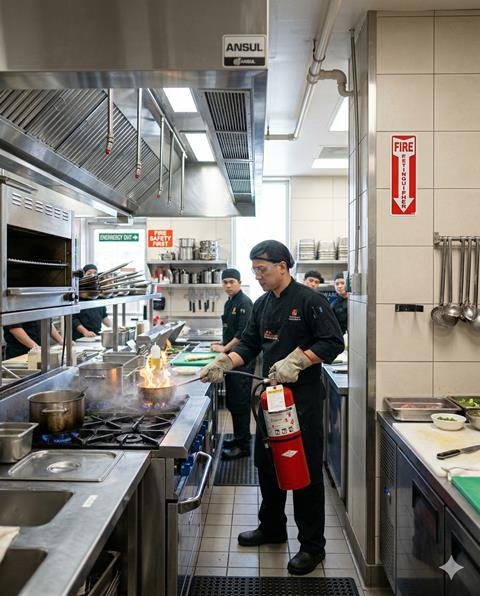
Types of Fire Extinguishers in Restaurants
Restaurant employees must understand the different types of fire extinguishers and when to use them.
Class K Fire Extinguishers
Specifically designed for kitchen fires involving cooking oils and grease.
Class A Fire Extinguishers
Used for fires involving paper, wood, and other ordinary materials.
Class B Fire Extinguishers
Used for flammable liquids such as oil and gasoline.
Class C Fire Extinguishers
Used for electrical fires.
Knowing which extinguisher to use is critical for effective fire control.
Fire Safety Best Practices for Restaurant Staff
Following daily safety practices can significantly reduce fire risks.
Keep Work Areas Clean
Regular cleaning prevents grease buildup, which is a major fire hazard.
Maintain Equipment Regularly
Routine inspections help identify potential issues before they become dangerous.
Handle Cooking Oils Carefully
Avoid overheating oil and never leave it unattended.
Avoid Overloading Electrical Circuits
Ensure that electrical equipment is used properly and safely.
Follow Safety Procedures
Employees should always follow established safety guidelines and protocols.
Consistent adherence to these practices helps maintain a safe working environment.
Fire Safety Best Practices for Restaurant Staff
Online training programs provide a convenient way for restaurant employees to learn fire safety practices. These programs allow employees to complete training at their own pace while gaining essential knowledge.
Training programs available through Compliance Courses Online are designed to help employees understand fire hazards, safety procedures, and emergency response techniques.
These courses provide practical knowledge that can be applied immediately in real-world restaurant environments.
Recommended Fire Safety Training Course
Fire Safety Training for Restaurant Staff
This course is designed to help employees understand fire risks and learn how to prevent and respond to fire emergencies in restaurant settings.
The training covers:
- Fire hazard identification
- Safe handling of cooking equipment
- Proper use of fire extinguishers
- Emergency evacuation procedures
- Fire prevention techniques
This course is ideal for restaurant employees, kitchen staff, and managers who want to maintain a safe and compliant workplace.
Price: $25
Related Articles
To learn more about restaurant safety and compliance, explore:
Conclusion
Fire safety training is an essential part of maintaining a safe and compliant restaurant environment. With the presence of open flames, hot equipment, and flammable materials, restaurants face significant fire risks every day.
By providing proper training, restaurant owners can ensure that employees understand how to prevent fires, respond effectively during emergencies, and protect both customers and staff.
Investing in fire safety training not only improves workplace safety but also helps restaurants maintain compliance and build trust with customers.
Expand Your Compliance Expertise
Food Safety & Workplace Compliance Certification Bundle of 5 Courses: $49
Food Safety Compliance Training for Restaurant Employees: $25
Restaurant Safety and HR Compliance Training: $25
Workplace Violence Prevention & EAP Training: $25
Anti-Harassment and Discrimination Training for Employees: $25