Restaurant Safety Training: Complete Guide for Employers & Employees
The restaurant industry is one of the most dynamic and fast-paced work environments. From food preparation and kitchen operations to customer service and cleaning procedures, restaurant employees handle multiple responsibilities every day. However, with this fast-paced environment comes a wide range of safety risks and compliance requirements.
Restaurant safety training is essential to ensure that employees understand how to work safely, maintain food hygiene, and comply with workplace regulations. Without proper training, restaurants face risks such as workplace injuries, food contamination, fire hazards, and legal compliance issues.
For restaurant owners and managers, providing proper safety training is not just a best practice—it is a necessity. A well-trained team helps reduce accidents, improve operational efficiency, and ensure a safe dining experience for customers.
In this complete guide, you will learn everything about restaurant safety training, including key training areas, compliance requirements, and how to implement effective training programs for your staff.
Why Restaurant Safety Training Is Important
Restaurant environments involve several potential hazards that can impact both employees and customers. Safety training plays a critical role in reducing these risks and ensuring smooth operations.
Prevent Workplace Injuries
Restaurant employees frequently work with sharp tools, hot surfaces, and slippery floors. Safety training helps reduce injuries by teaching employees how to handle equipment and maintain safe working conditions.
Maintain Food Safety Standards
Improper food handling can lead to contamination and foodborne illnesses. Training ensures that employees follow proper hygiene and food storage practices.
Ensure Regulatory Compliance
Restaurants must comply with health and safety regulations. Proper training helps businesses meet these requirements and avoid penalties.
Improve Employee Performance
Employees who are trained in safety procedures perform their duties more confidently and efficiently.
Key Restaurant Safety Training Programs
To maintain a safe and compliant restaurant environment, employees should complete the following essential training programs.
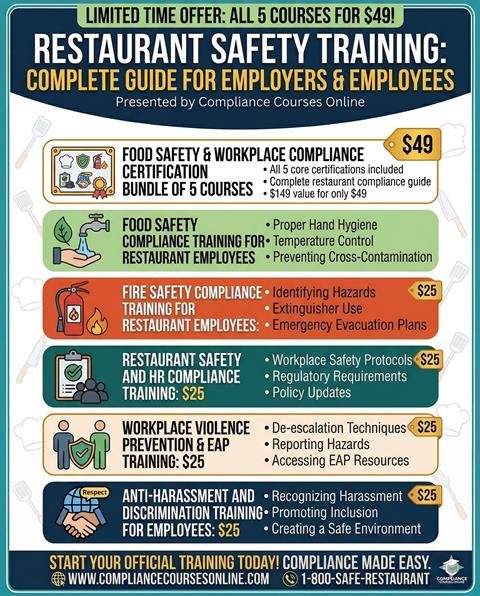
Food Safety Training
Food safety training is one of the most important programs for restaurant employees. It teaches proper food handling, storage, and hygiene practices to prevent contamination.
Employees learn:
- Safe food temperatures
- Preventing cross-contamination
- Proper hand hygiene
- Cleaning and sanitation procedures
Recommended Course: Food Safety Training for Restaurant Employees: $25
Fire Safety Training
Restaurants are at high risk of fire hazards due to cooking equipment, open flames, and flammable materials. Fire safety training helps employees prevent and respond to fire emergencies.
Employees learn:
- Fire prevention techniques
- How to use fire extinguishers
- Emergency evacuation procedures
Recommended Course: Fire Safety Training: $25
Restaurant Safety and HR Compliance Training
Restaurant safety and HR compliance training provides employees with a comprehensive understanding of workplace policies, safety standards, and employee responsibilities. This training ensures that staff members follow proper procedures while maintaining a safe and compliant work environment.
Employees learn:
- Workplace safety practices
- Employee responsibilities and compliance policies
- Professional workplace conduct
- Regulatory requirements for restaurant operations
Recommended Course: Restaurant Safety and HR Compliance Training: $25
Workplace Violence Prevention & EAP Training
Workplace Violence Prevention and Emergency Action Plan Training for Employees is a comprehensive safety course designed to help organizations create safer, more prepared workplaces.
Employees learn:
- Understand the different types of workplace violence and how they impact safety
- Apply practical prevention strategies to reduce workplace risks
- Respond safely during violent or high-risk situations
Recommended Course: Workplace Harassment Prevention Training: $25
Anti-Harassment and Discrimination Training for Employees
A respectful workplace is essential in the restaurant industry where employees work closely in fast-paced environments. Anti-harassment and discrimination training helps employees understand acceptable workplace behavior and promotes a culture of respect and inclusion.
Employees learn:
- What constitutes harassment and discrimination
- How to prevent inappropriate behavior
- Reporting procedures and employee rights
- Creating a respectful workplace environment
Recommended Course: Anti-Harassment and Discrimination Training for Employees: $25
How to Implement Restaurant Safety Training
Implementing a structured training program is essential for maintaining safety and compliance in restaurants.
Step 1: Identify Training Needs
Evaluate your restaurant operations and identify potential risks that require training.
Step 2: Provide Online Training
Online training programs allow employees to complete courses at their convenience without disrupting operations.
Step 3: Track Employee Progress
Ensure that all employees complete required training and maintain records for compliance purposes.
Step 4: Conduct Regular Refresher Training
Safety standards evolve over time, so refresher training is important to keep employees updated.
Who Should Take Restaurant Safety Training?
Restaurant owners
Kitchen staff
Food handlers
Managers
New employees
Benefits of Restaurant Safety Training
Providing safety training offers multiple benefits for restaurant owners and employees.
- Reduced Workplace Accidents
- Improved Employee Confidence
- Better Customer Experience
- Compliance With Regulations
- Lower Legal Risks
Start Your Restaurant Safety Training Today
If you are looking to improve safety, compliance, and professionalism in your restaurant, investing in proper training is essential.
Professional training programs available at Compliance Courses Online are designed to help restaurant employees and managers understand safety standards, workplace regulations, and best practices.
Related Articles
To learn more about restaurant safety and compliance, explore these guides:
Conclusion
Restaurant safety training is essential for maintaining a safe, compliant, and efficient workplace. Employees who are trained in food safety, workplace safety, and compliance standards are better equipped to perform their responsibilities and prevent risks.
By implementing structured training programs, restaurant owners can protect their staff, improve operational efficiency, and deliver a better experience to customers.
Investing in safety training is not just about compliance—it is about building a strong, responsible, and professional workplace.